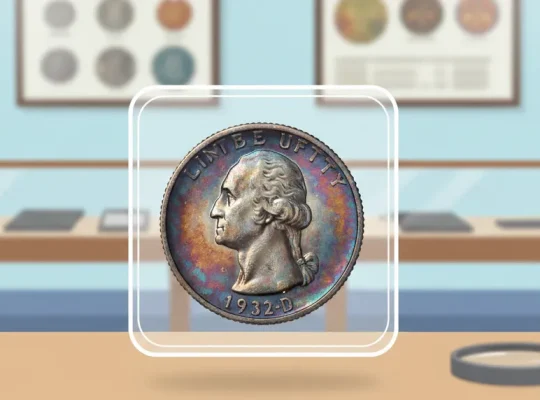
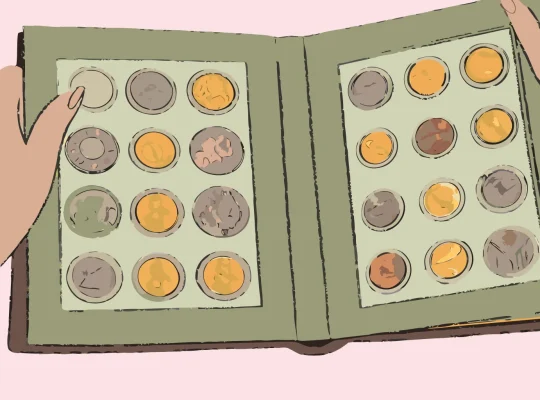
For American valuable quarters, a coin’s value is decided not only by its year of making and production number, but also by three connected elements: patina, physical condition, and grade.
Understanding these remains necessary for correctly valuing a coin and making good choices when buying or selling.
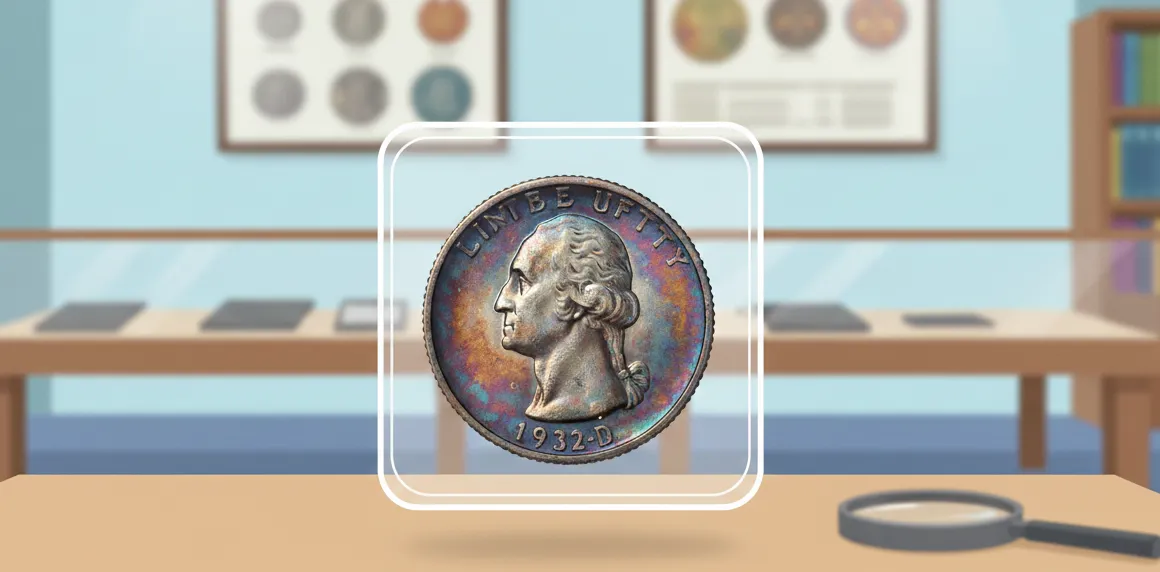
Patina: Protection and Decoration
Patina acts as a thin chemical layer that naturally forms over time on the surface of a metal coin as a result of the metal’s interaction with air, water, and other environmental substances.
What is Patina?
The patina forms slowly, often it takes decades, and indicates that the coin was not cleaned using aggressive methods.
On silver quarters, the patina usually has a light golden or yellow hue, then turns into iridescent, blue, purple, or black tones.
It serves as a protective layer that prevents further damage to the metal and slows down the corrosion process, especially for copper and bronze coins.
Raising Value
Coins having natural, even, bright, and appealing patina often sell for significantly higher prices.
Collectors show readiness to pay a high extra amount for coins having rainbow or multi-colored shades, especially when the patina spreads evenly and does not hide design details. The beauty and unique look of natural patina make every coin one of a kind.
Lowering Value
If the patina looks unnatural, showing spots or uneven dark areas, it may point to incorrect storage or harsh environmental effects.
Thick, black layers hiding details usually reduce the value, as they worsen the coin’s appearance — use the coins value app to know for sure.
Coin Cleaning
A coin that has been cleaned of its patina almost always loses its collectible value.
Cleaning removes the patina and microscopic metal parts, leaving scratches and an unnatural shine on the surface, immediately seen by experts and lowers the coin’s grade.
Coin Condition
Coin condition, meaning its preservation level, describes how badly the coin has been damaged or worn down from use.
This acts as the most obvious and defining factor affecting value.
Preservation Scale
Coins divide into two main groups, each containing many subcategories:
Coins Used in Circulation
Showing clear signs of wear, having rub marks on the highest points of the design, where the metal touched other objects.
- Examples of conditions: Good (G), Very Good (VG), Fine (F), Very Fine (VF), Extremely Fine (EF or XF), About Uncirculated (AU).
Each step up in condition (for example, from VG to F) may multiply the price many times, especially for old and unusual quarters, such as the Standing Liberty Quarter.
Coins Not Used in Circulation
Having no signs of wear from use. All original making details remain preserved.
The main rule involves keeping the original shine, which the mint added to the coin during production.
- Examples of conditions: Mint State (MS-60 to MS-70). MS-70 coins are perfect, showing no defects even under magnification.
Condition’s Effect on Value
The better the condition, the higher the price. The difference between a coin in MS-60 condition (uncirculated, but having flaws) and MS-65 (uncirculated, having high quality) for an unusual quarter may amount to thousands of dollars.
Defining aspects of the condition:
- Keeping small details, such as hair strands, eagle feathers, or letters. On Standing Liberty Quarters, this is the Full Head (FH) standard.
- Any scratches, dents, or marks from impact received during transport or storage lower the condition. Uncirculated coins having minimal impact marks sell for more.
- Keeping the original shine. Coins retaining a bright, undamaged shine (Original Mint Luster) cost much more than coins losing their shine due to poor storage.
Grade
Grade acts as a number value given to a coin by an expert, showing its condition on the universal Sheldon scale inside any coin scanner app.
This process remains the main tool for deciding the value of collectible quarters.
The Grading Process
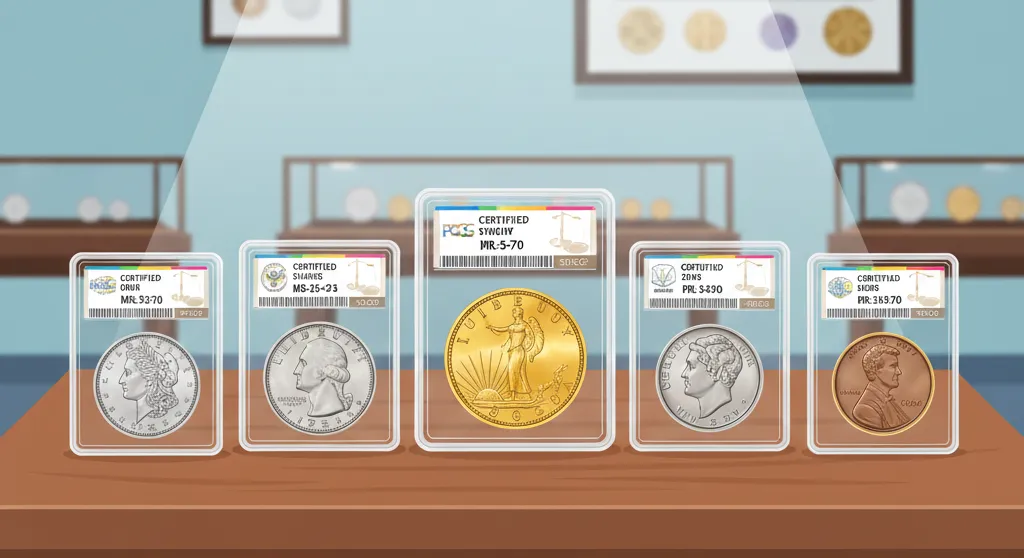
A coin goes to an independent rating service, for example, PCGS, NGC, where experts examine it, considering:
- The presence and degree of rubbing marks received during use.
- The presence of scratches, dents, or impact marks.
- The quality and completeness of the original shine remaining.
- The overall look, including the patina.
After inspection, the coin receives a number grade and is placed in a sealed plastic holder with a certificate confirming its authenticity and grade.
Grade’s Effect on Price
A certified grade serves as a guarantee for the buyer. A coin with an official grade sells faster and for more money than a similar coin without a certificate.
- Grading removes personal opinion from condition assessment, letting buyers and sellers worldwide compare coins using the same standard.
- Auctions and dealers often use a minimum grade as a base value for serious collections. Coins not reaching this base are considered less easy to sell.
Even a one-point difference (for example, MS-64 versus MS-65) may mean a huge difference in price, especially for the most expensive quarters, showing their extreme rarity.
| Sheldon Scale Condition | Signs of Wear | Estimated Price |
| G-4 | Heavy wear, design details smoothed out | $8 – $12 |
| VF-20 | Noticeable wear, but the main details are visible | $25 – $40 |
| AU-58 | Small wear only on the highest points of the design, 90% shine remains | $80 – $150 |
| MS-65 | No signs of wear, strong shine, minimum bag marks | $400 – $800+ |
The Combined Effect of Factors
A quarter’s value is decided by combining all three factors, not just one.
An unusual coin, being in poor condition or having damaged patina, will cost much less than a common coin in perfect condition, showing beautiful patina.
- A quarter, showing a very low production number but a low grade (G-4) due to heavy use, sells as an unusual coin, but only at a price showing its worn state.
- A quarter, having a high grade (MS-65) and even rainbow patina, sells for a high extra amount, because the patina raises its visual appeal.
- A quarter, having a high grade (MS-65) but cleaned, will have a “Cleaned” note and sell at the price of a lower-grade coin.
Therefore, patina, condition, and grade work together.
The coin’s condition decides the number grade, and patina affects its appeal, potentially raising or lowering the price, even when the number grade remains the same.
For a collector, judging these three factors remains the basis for successful participation in the coin-collecting market.